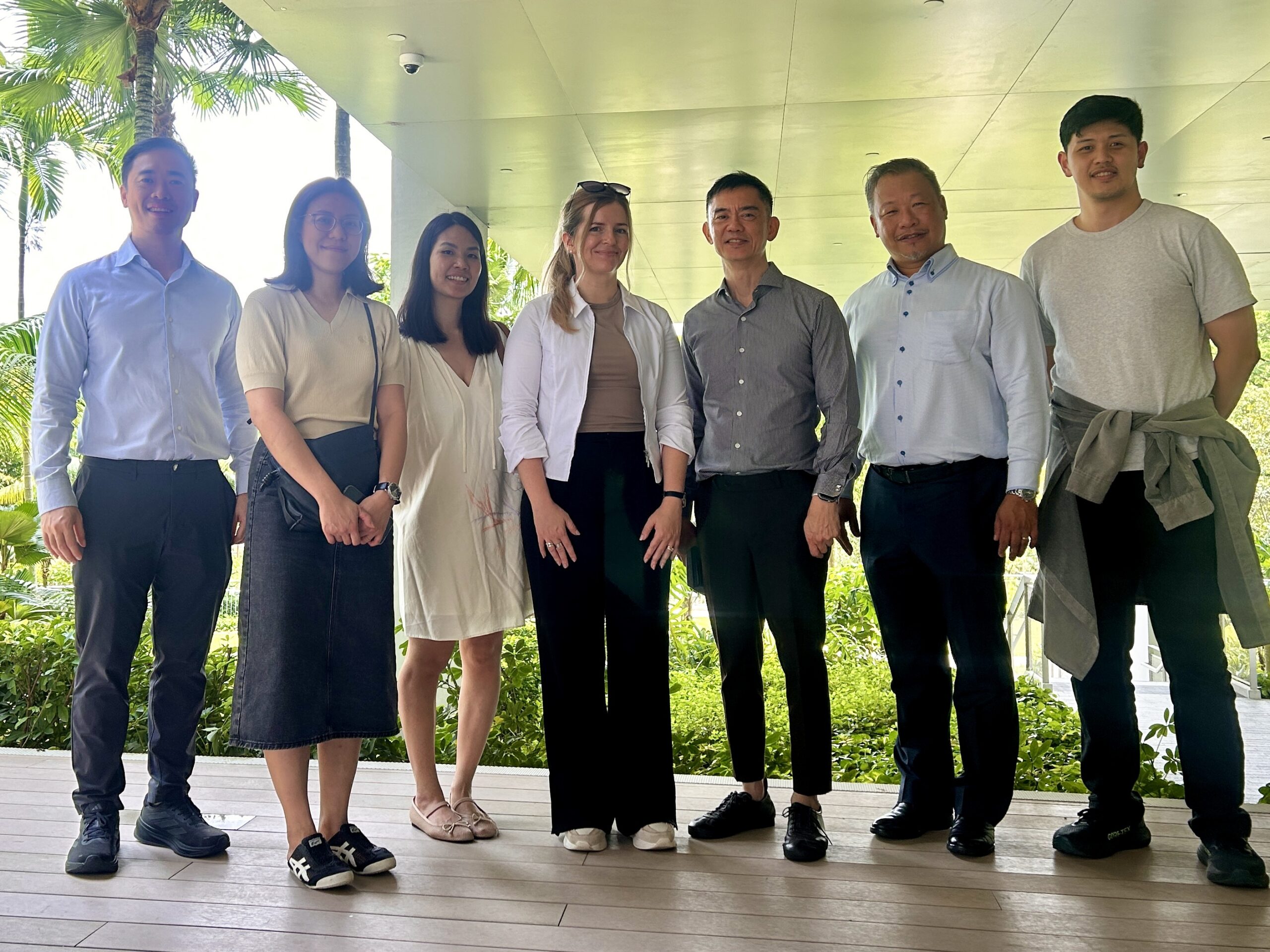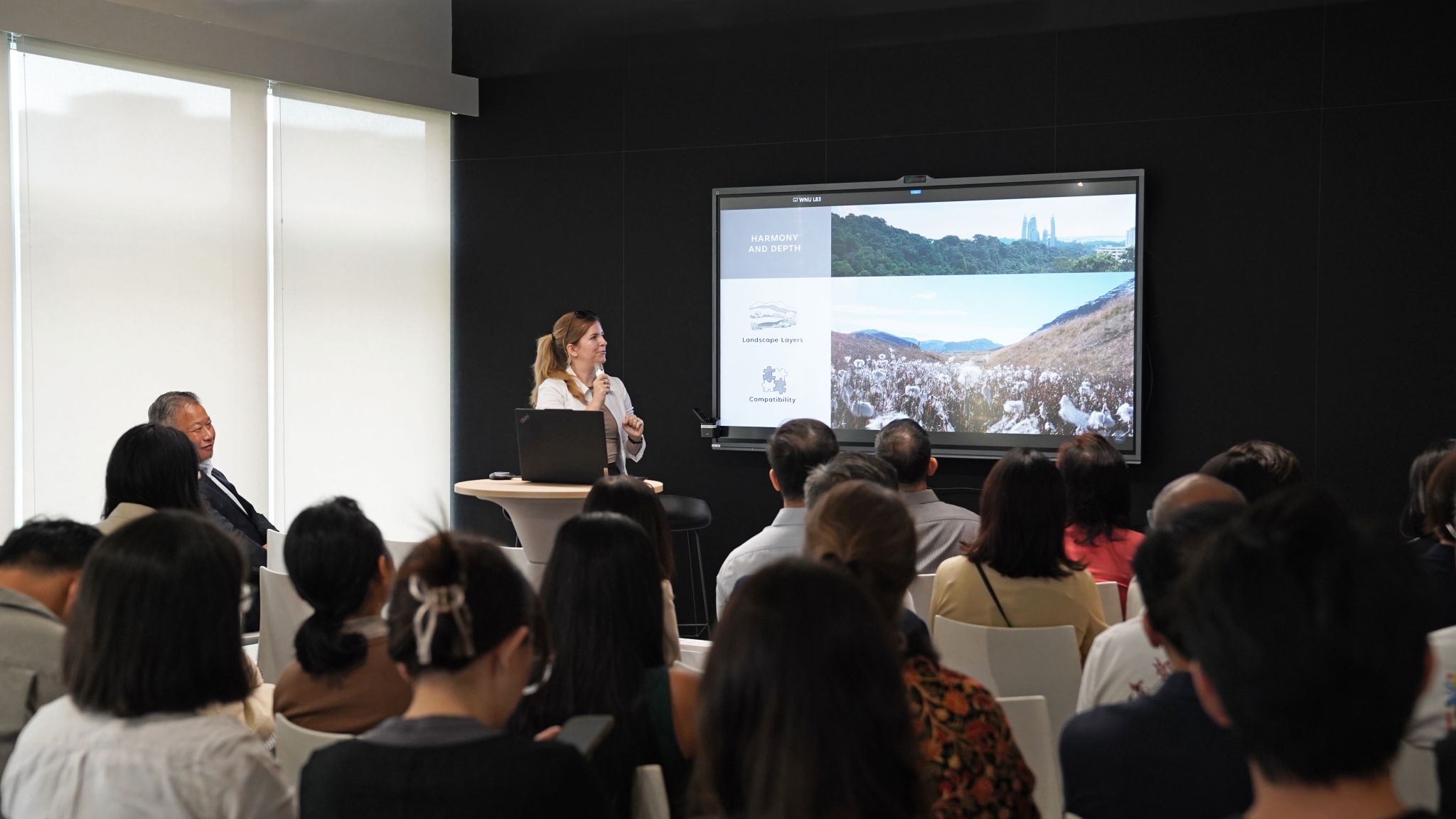
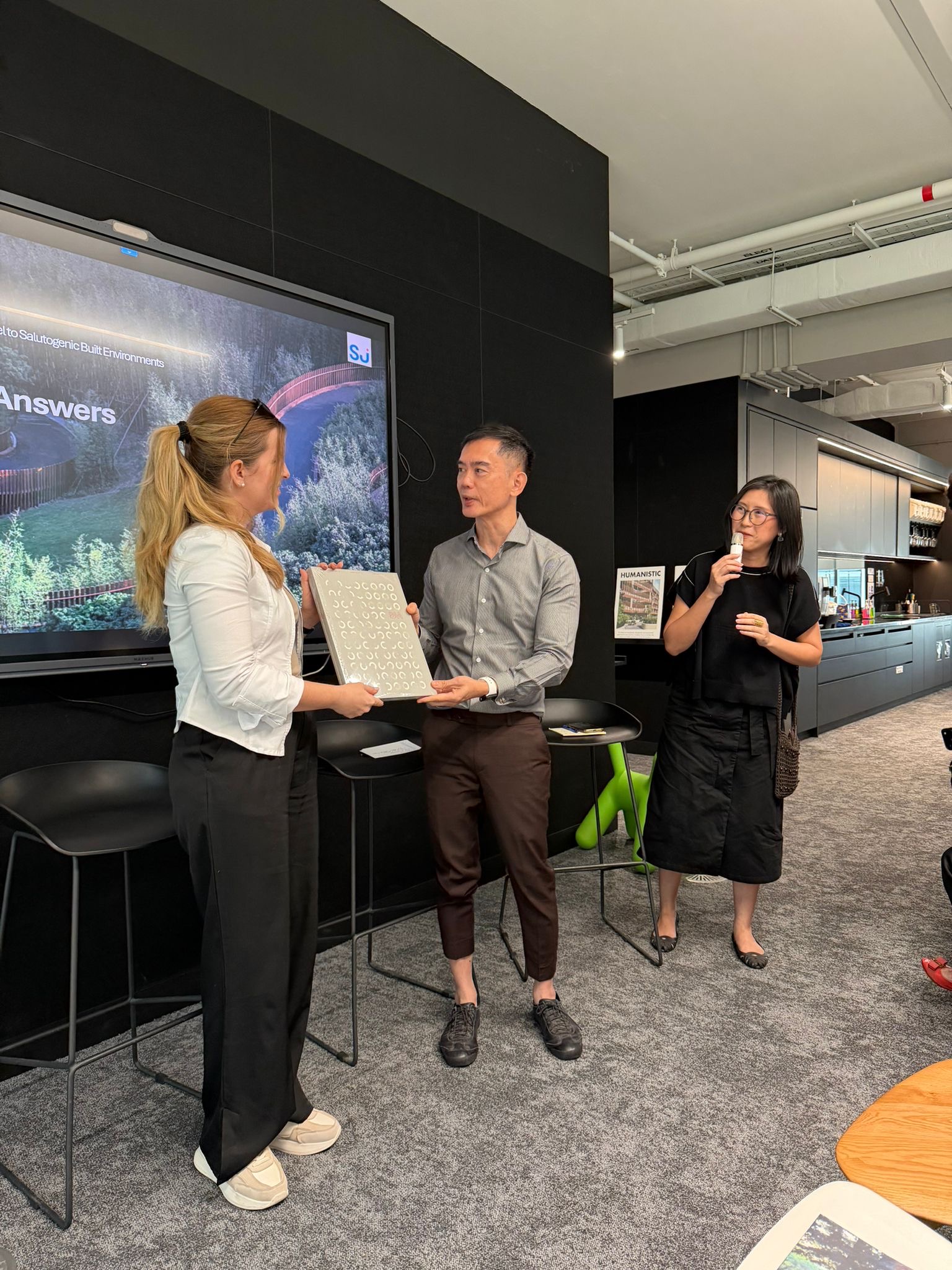
Dr. Agnieszka Olszewska-Guizzo was at SJ Group in Singapore last Friday to give a keynote speech on the Contemplative Landscape Model (CLM) in a session entitled, "Designing for Mental Health: From Contemplative Landscape Model to Salutogenic Built Environments".
This was a great opportunity to share updates and insights on the groundbreaking research currently ongoing as part of the GreenInCities project.
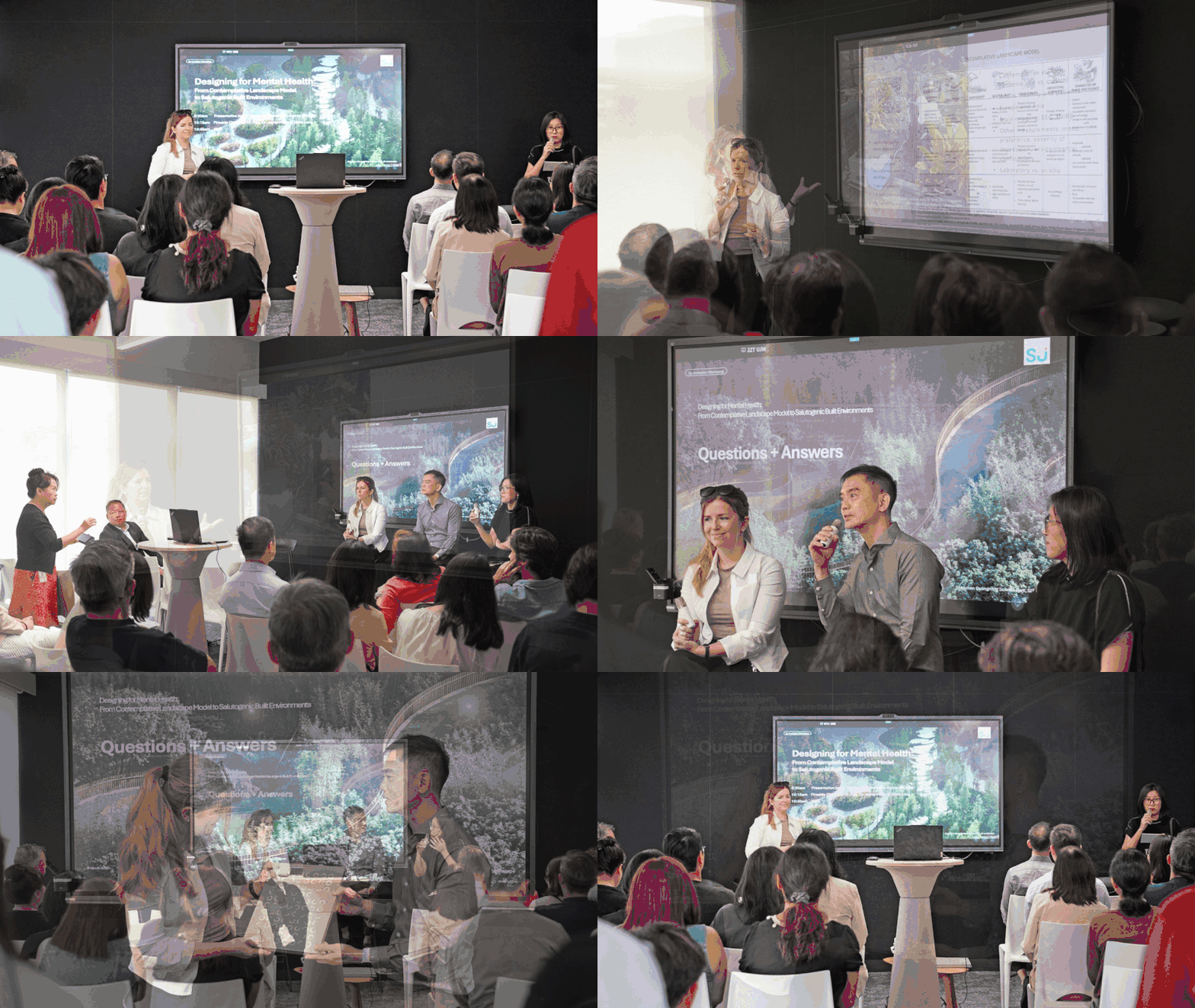
Hosted by SAA Architects on the SJ Campus in the Jurong Innovation District, they shared the following recap of the event:
In dense urban environments like Singapore, even small, intentional design decisions – framing sky views, creating moments of calm, or integrating nature – can meaningfully shape how people feel and function.
This was emphasised at a recent Architecture + Design workshop hosted at SAA, featuring Dr. Agnieszka Olszewska-Guizzo (Dr. Aga), President & Founder of NeuroLandscape, and a panel discussion comprising Dr. Aga and SJ Group’s Dr. Jamie Miller, Director, Regenerative Design, and Chris Long, Senior Director, Landscape. The session explored how neuroscience, design, and well-being intersect to shape healthier, more restorative environments.
During Dr. Aga’s presentation, the workshop participants were brought through the groundbreaking Contemplative Landscape Model (CLM), a neuroscientifically validated framework showing why some landscapes are more restorative than others – and why not all green spaces are equal. Drawing on brain imaging research, CLM identifies features such as landscape layers, archetypal elements, natural light, biodiversity, and psychological refuge that reduce stress and enhance positive emotions.
Dr. Aga further shared evidence-based strategies showing CLM’s impact on urban and therapeutic landscapes, highlighting practical applications in healthcare and public spaces, alongside neurourbanism tools like CLASS and NUIX that translate science into actionable outcomes.
This was followed by a fireside chat with Dr. Aga, Jamie, and Chris, exploring CLM’s application across different scales, typologies, and cultural contexts, as well as Singapore’s early adoption of evidence-based approaches to urban well-being. The discussion also touched on how designers balance intuition with research in practice. As Chris noted, “Design matters, and while designers do have good intuition, it’s also very important to understand the knowledge and the science behind it.”
A key takeaway from the session is that design is never neutral. As research, design intuition, and emerging tools converge, architects and landscape designers have both an opportunity and a responsibility to place human well-being at the heart of their work.
We look forward to continuing these important dialogues and advancing design practices that prioritise mental health and salutogenic urban environments.
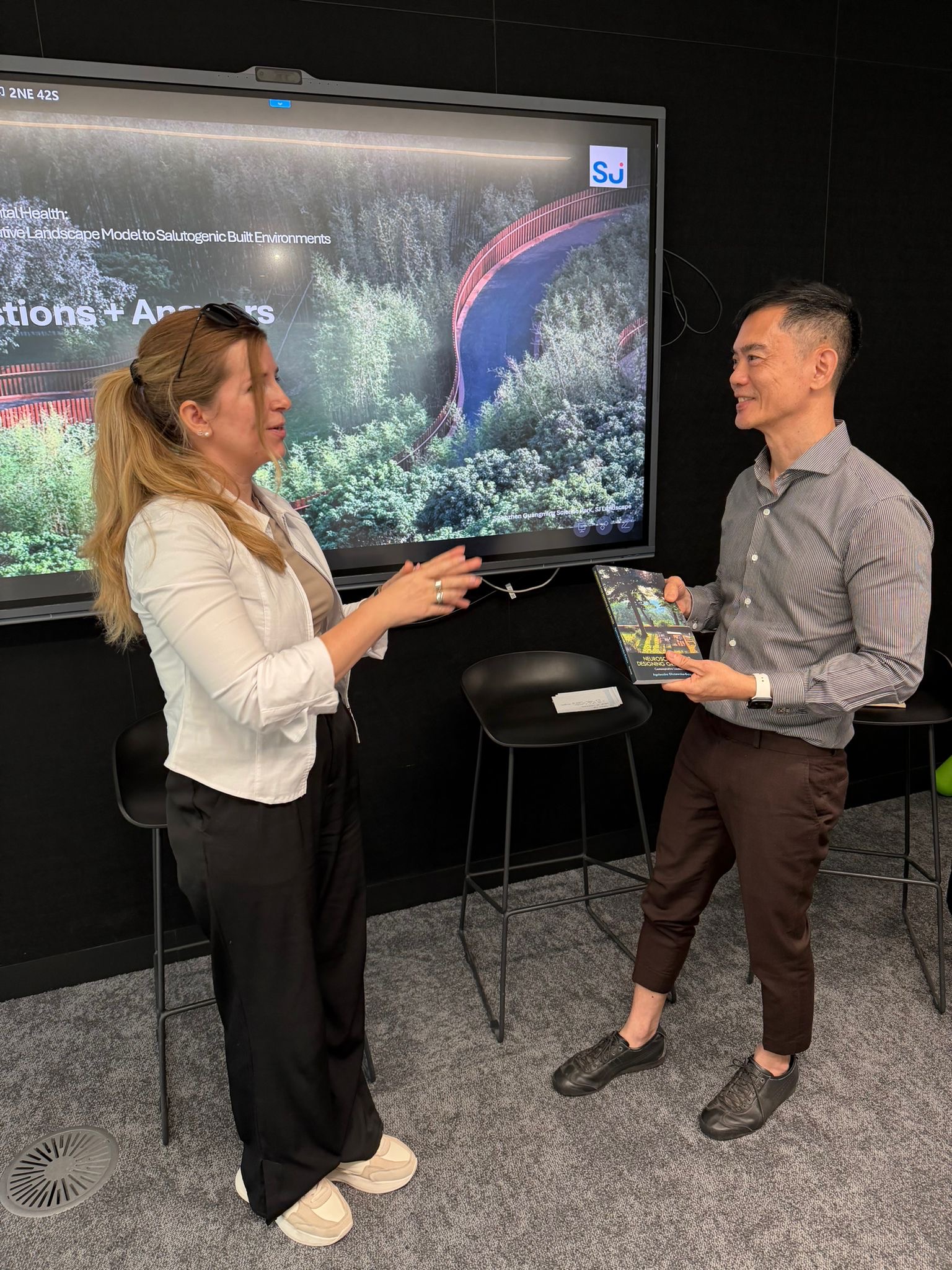
SJ Group Senior Director Chris Long added:
"A heartfelt thank you to Dr Agnieszka Olszewska-Guizzo (Dr Aga) for an illuminating keynote. Your work on the Contemplative Landscape Model (CLM) continues to shape how we think about designing environments that genuinely support mental wellbeing. We’re excited to deepen our application of CLM in our landscape design projects, especially within healthcare settings."