

-
BLUEPRINT: Building Living Urban Ecosystems through Participatory Renovation and Innovation Tools
GA#: 101235708
Funding Scheme: Horizon Europe
Call: HORIZON-CL5-2024-D4-02-05
Grant authority: the European Climate, Infrastructure and Environment Executive Agency (CINEA).
Start/ End Date: 01.10.2025 / 31.03.2029
Duration: 3.5 years
Budget: € 4.999.347,04
Budget (NL): € 167.604,29
The Project
BLUEPRINT is a project funded by the European Commission that aims to reshape urban regeneration through participatory design and digital innovation. We aim to develop an integrated ecosystem of various digital technologies (e.g., multi-scale digital twins, AI-powered digital tools, augmented and virtual reality, etc.) to support climate-neutral districts and inclusive cities.
BLUEPRINT’s goal is grounded in the New European Bauhaus (NEB) initiative, a creative and interdisciplinary movement that connects the European Green Deal to our living spaces and experiences. BLUEPRINT adopts the NEB’s three core values:
- Beautiful: Creating urban spaces that are aesthetically pleasing and culturally meaningful.
- Sustainable: Prioritizing circularity, biodiversity, and zero-emission goals.
- Together: Fostering community engagement and social inclusion through our participatory workshops and tools.
BLUEPRINT places citizens at the heart of the renovation process, ensuring that buildings are not only energy-efficient but also healthy, comfortable, and inclusive spaces to live in. BLUEPRINT will deploy digital solutions that enable stakeholders to visualise potential renovation strategies, simulate their impacts and collectively shape future urban scenarios.
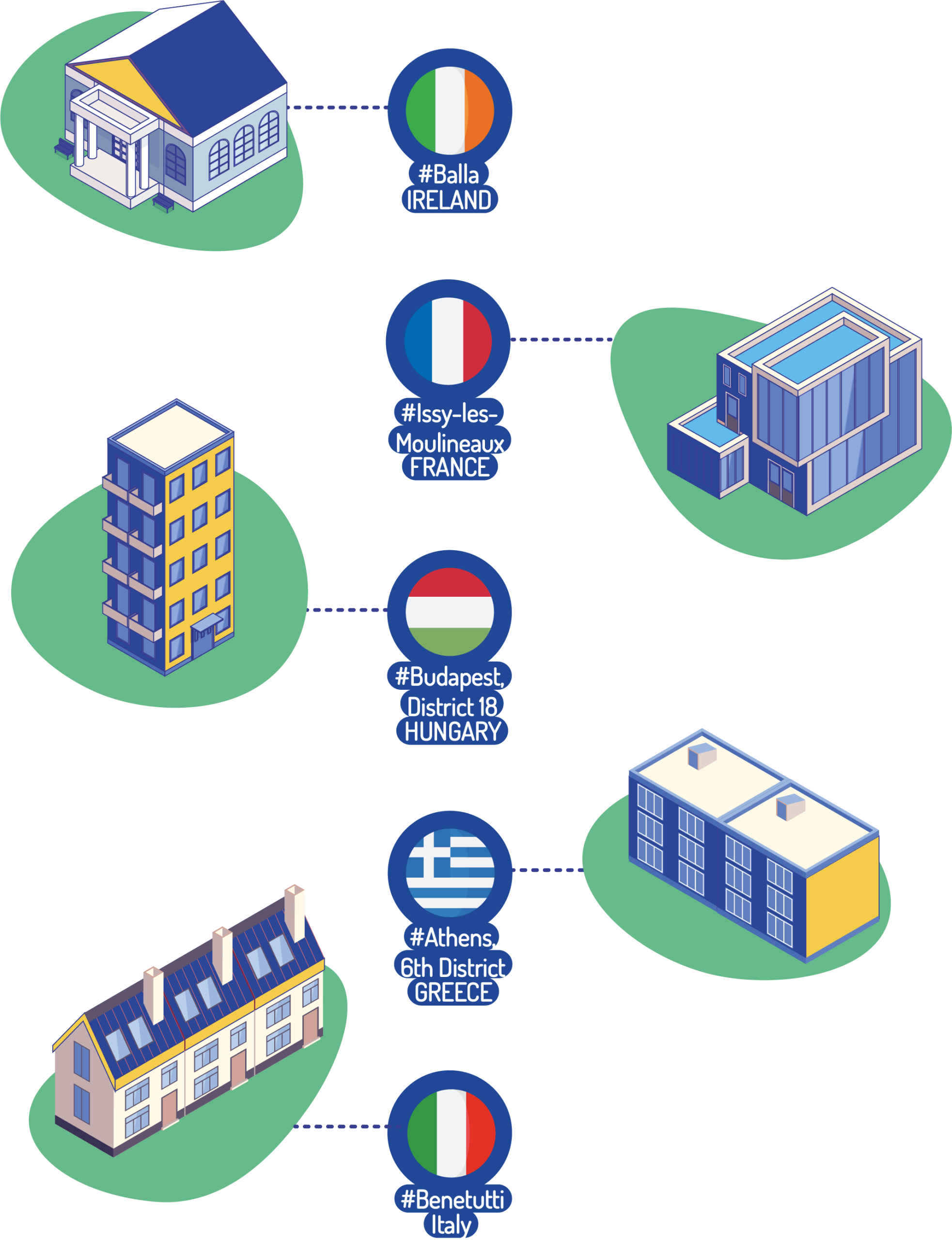
Citizens are at the heart of the project, with strong emphasis on co-design, accessibility and social inclusion. BLUEPRINT’s approach will be demonstrated and validated in five real-life urban pilots across Europe:
The Consortium
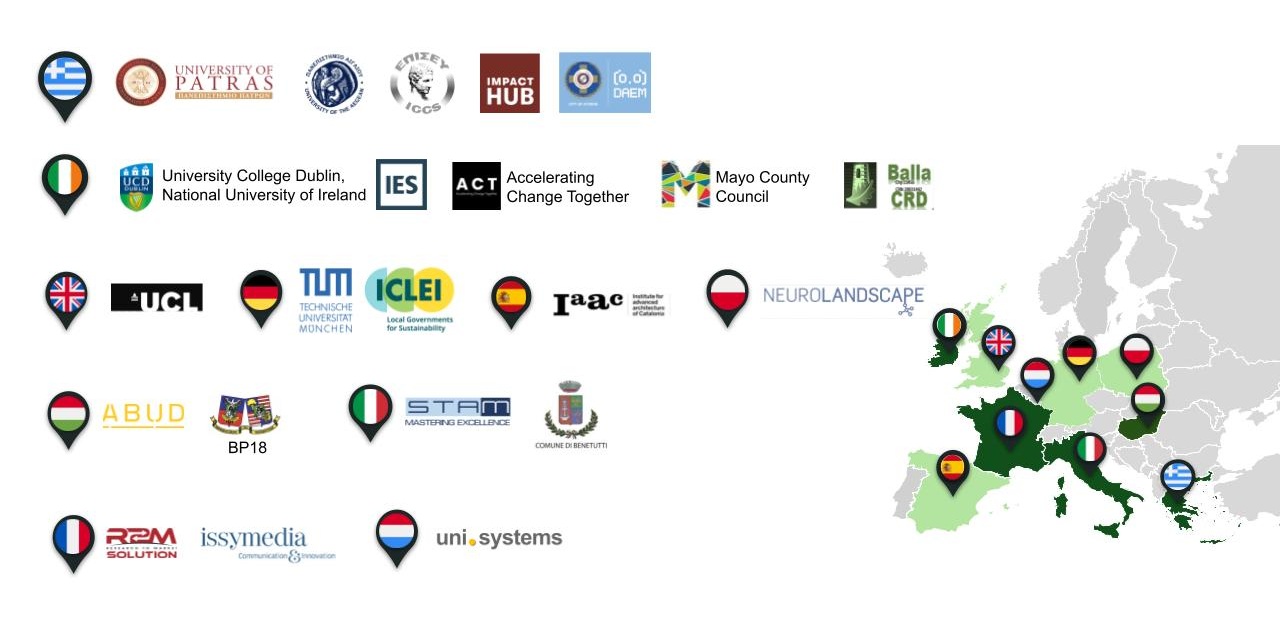
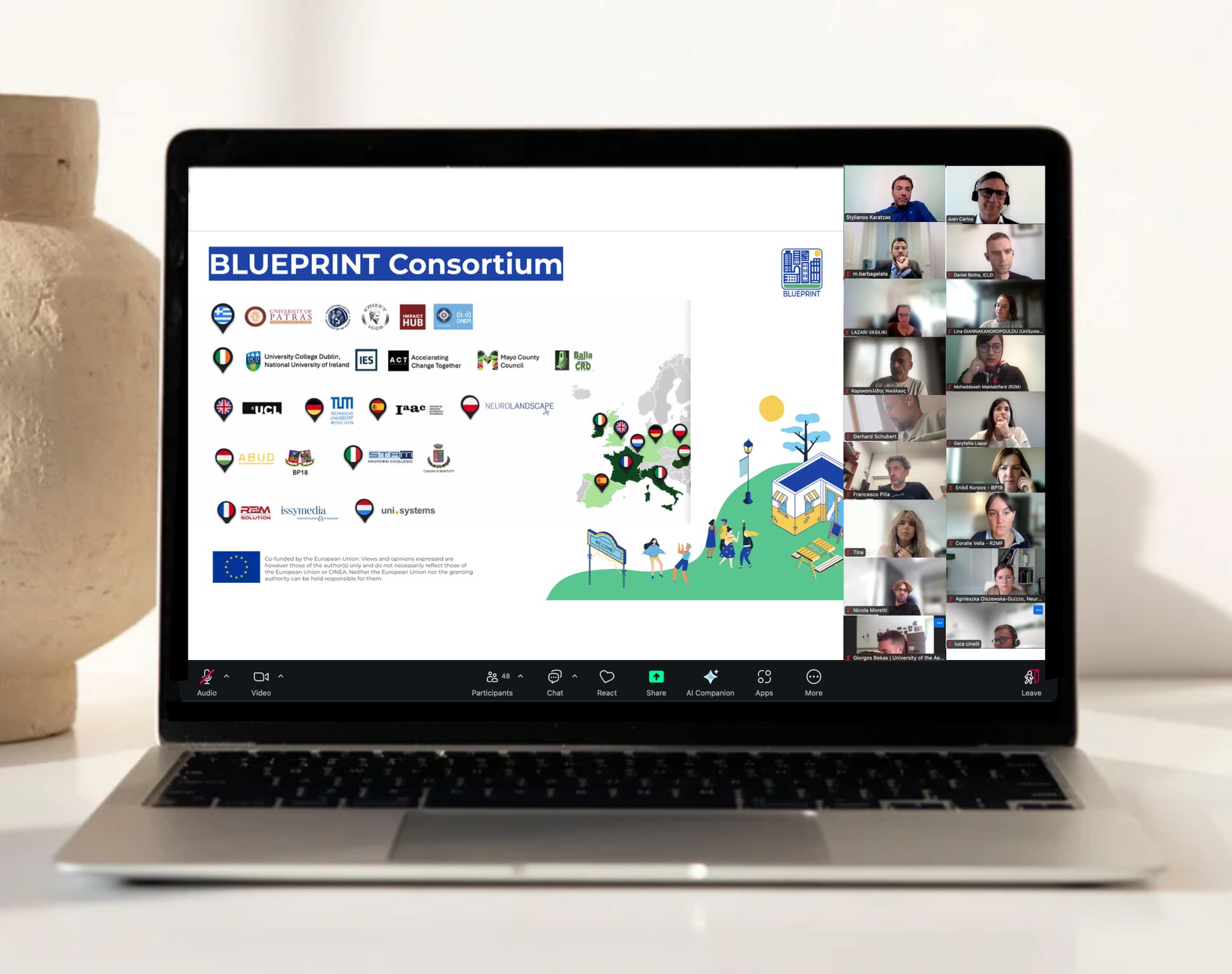
BLUEPRINT is coordinated by Panepistimio Patron (University of Patras, Greece) under the coordination of Dr. Stylianos Karatzas (Project Coordinator) and brings together 23 partners from 10 European countries. Learn more about our partners on the official BLUEPRINT website's consortium page.
The consortium’s diversity ensures strong cross-disciplinary integration across: Urban planning and architecture; Social sciences and citizen engagement; ICT and AI development; Energy systems and sustainability; Policy, governance and training.
Our Role in BLUEPRINT
NeuroLandscape (NL) will bring our unique contribution to BLUEPRINT.
- CLASS – Digital Tool:
By applying machine learning and large language modelling, NL will develop CLASS: the Contemplative Landscape Automated Scoring System, an automated version of the Contemplative Landscape Model (CLM, Olszewska-Guizzo, Sia, & Escoffier, 2023). CLM captures the well-being impact of natural landscape features (e.g., biodiversity, long-distance views or nature-derived archetypes) and correlates with neural markers related to deep relaxation and mindfulness (Olszewska A., 2023). CLASS will be integrated into the unified BLUEPRINT Digital Toolset and allow users to quickly assess the restorative potential of urban spaces.
- Neuroaesthetics and well-being research:
Furthermore, NL will conduct mobile electroencephalogram (EEG) studies at selected pilot sites, to measure citizens’ neurophysiological responses to planned renovation, experienced as virtual scenarios. NL brings expertise in cognitive psychology and neuroaesthetics research, so the findings could further inform the design process of urban interventions, while aligning with the New European Bauhaus (NEB) pillars. NL will focus on the quantification of citizens’ aesthetic experience and wellbeing impacts, and promote the significance of nature-connectedness on the wellbeing of local citizens.
Team
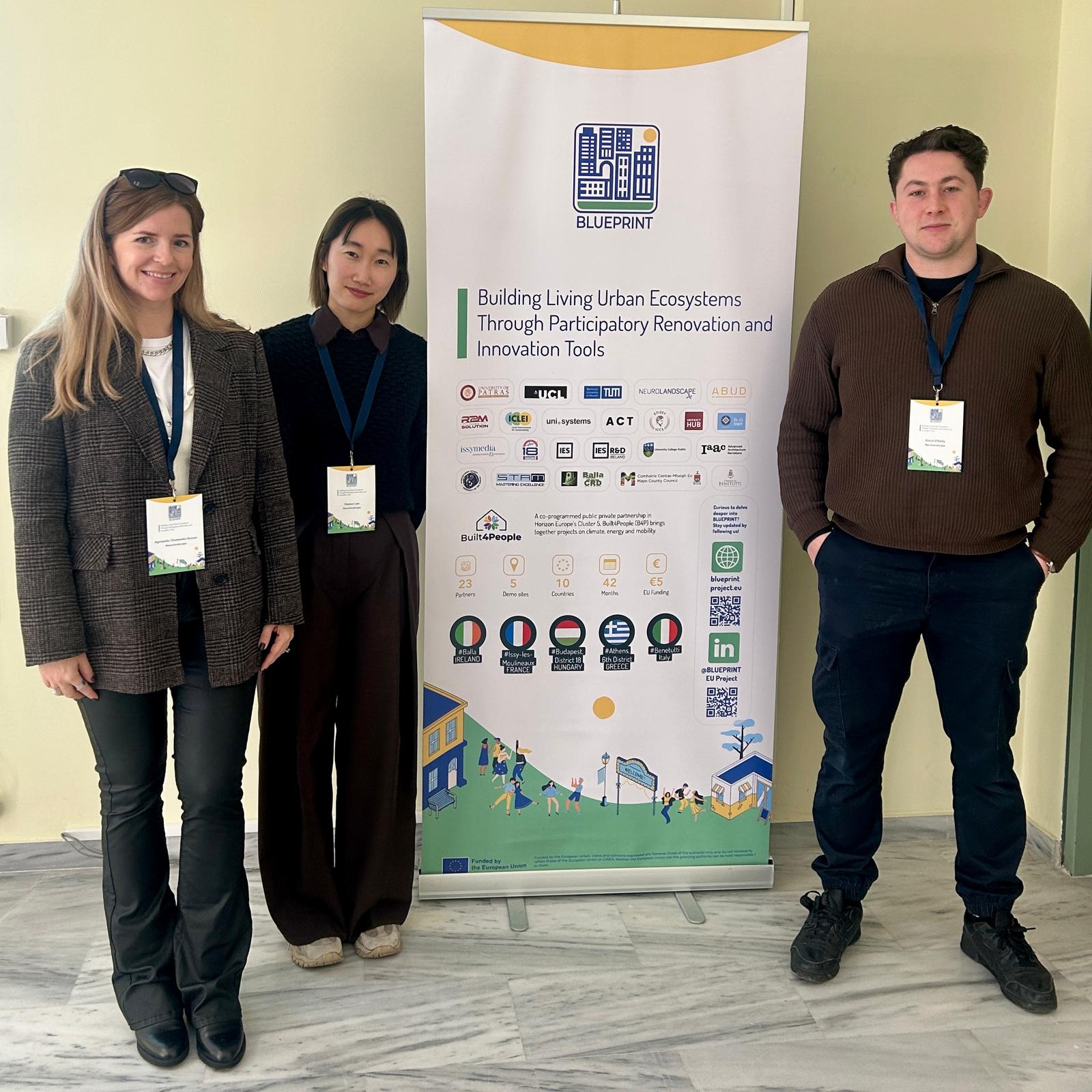
Dr. Haeeun Lee (Neuroaesthetics researcher)
Dr. Agnieszka Olszewska-Guizzo (Landscape architect, Neurourbanism researcher)
Dr. David O'Reilly (Computational neuroscientist)
For news and updates, please follow:
BLUEPRINT official website | BLUEPRINT LinkedIn

Views and opinions expressed are however those of the author(s) only and do not necessarily reflect those of the European Union or CINEA. Neither the European Union nor the granting authority can be held responsible for them.